




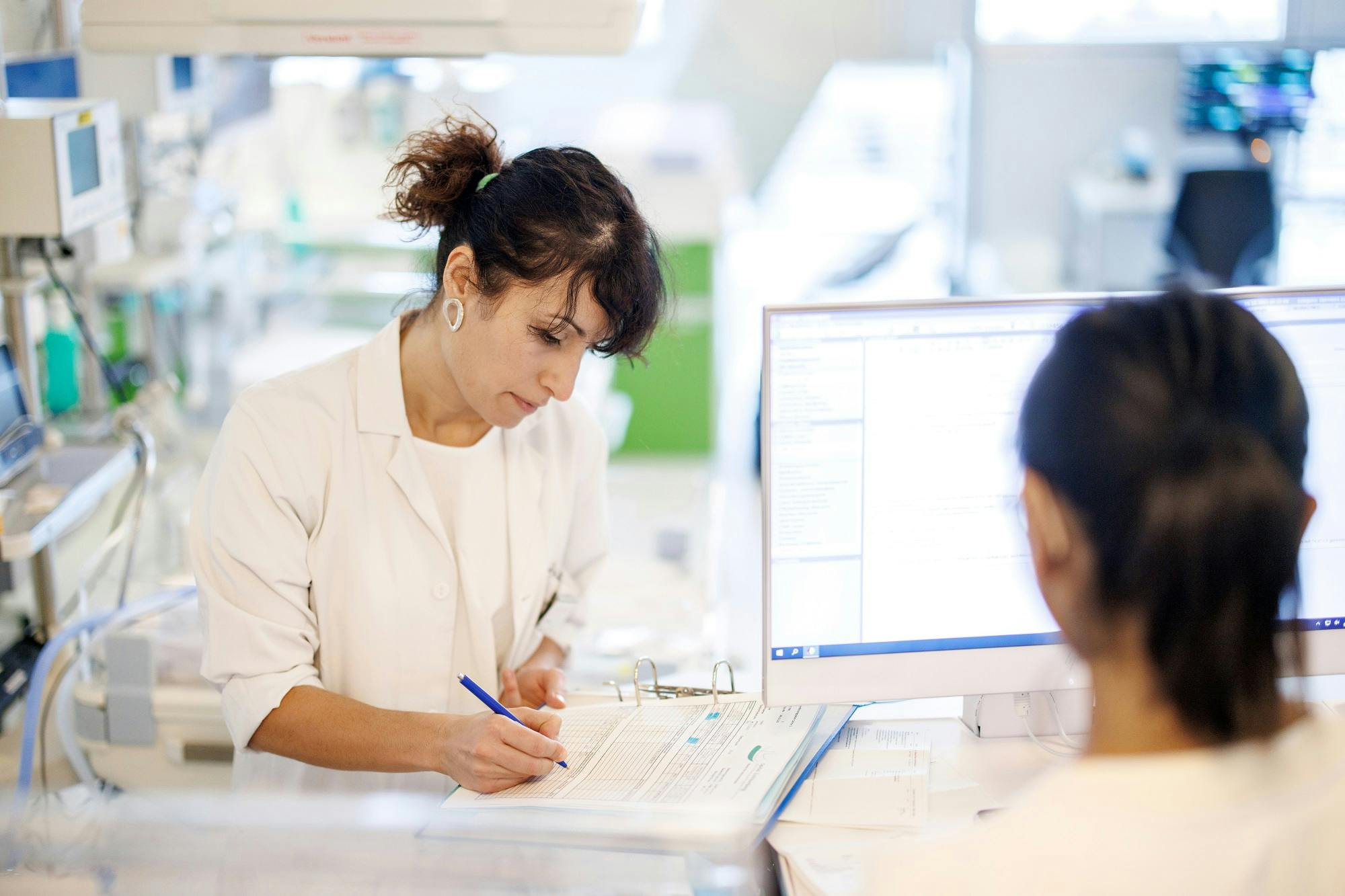

Recognising pre-eclampsia early - Interview with PD Dr Anke Reitter
PD Dr. med. Anke Reitter
May 21, 2026

4 min
Pre-eclampsia is a complex clinical picture that is still not fully understood. What is clear, however, is that the condition develops very early in pregnancy and can have serious consequences for mother and child.
PD Dr Anke Reitter, a specialist in foetomaternal medicine, provides answers to the most important questions and focuses not only on treatment, but above all on how pre-eclampsia can be detected early or even prevented.
What is pre-eclampsia?
Pre-eclampsia is a pregnancy-related condition that usually occurs after the 20th week of pregnancy. In rare cases, it can also occur earlier in pregnancy.
It is typically characterised by a combination of increased blood pressure, protein loss via the kidneys and possible involvement of other organs, particularly the liver, kidneys and nervous system. Kidney involvement is usually indicated by protein in the urine and helps to distinguish pre-eclampsia from isolated gestational hypertension.
The course of the disease can vary greatly. In some women the condition is mild, in others it deteriorates rapidly. In severe cases, it can be life-threatening for both the mother and the child.
How common is pre-eclampsia?
Around 1 in 20 pregnant women - i.e. around 5% - are affected. This makes pre-eclampsia one of the most common pregnancy diseases worldwide.
How does pre-eclampsia develop and who is particularly at risk?
Pre-eclampsia occurs very early in pregnancy, usually in connection with the development of the placenta. It is assumed that impaired implantation or remodelling of the placental vessels plays a central role.
This can restrict the supply to the placenta, which can then trigger a cascade in the maternal circulation - with effects on blood pressure, the vascular system and organ function.
There is an increased risk with first pregnancies, multiple pregnancies, pre-existing high blood pressure, diabetes or kidney disease, severe obesity, a family history and previous pre-eclampsia.

PD Dr med Anke Reitter
"Pre-eclampsia is a condition that we do not yet fully understand how it develops. However, we do know that it develops very early in pregnancy, which is why I am particularly keen to focus on the possible prevention of pre-eclampsia through early pr...
0/0
What symptoms should pregnant women take seriously?
In most cases, the symptoms occur suddenly and should always be clarified promptly. These include in particular sudden weight gain with swelling of the face and hands, headaches, visual disturbances such as flickering or flashes of light, upper abdominal pain, nausea and significantly increased blood pressure.
These warning signs should not be waited for, but should be checked immediately by a doctor - either at the gynaecologist's practice or in hospital.
Why is early detection so important?
Pre-eclampsia is one of the most common complications of pregnancy and yet is often underestimated. We know that it starts very early in pregnancy, even though the symptoms usually do not appear until later, which is precisely why early detection is so crucial.
What options are there for early detection and prevention - especially here at Zollikerberg Hospital?
Pre-eclampsia screening in the first trimester is an important step forward. Since 2020, we have been offering this at Zollikerberg Hospital and now also at the Women's Permanence Zurich, enabling us to detect up to 75% of cases at an early stage.
As the disease develops at this early stage, this time window is particularly relevant for prevention. If there is an increased risk, early treatment with low-dose acetylsalicylic acid (aspirin) can be used. Studies show that this can significantly reduce the risk of pre-eclampsia occurring - especially if it is started early.
How is pre-eclampsia treated?
Treatment always depends on the severity, the week of pregnancy and the condition of the mother and child. In principle, we try to continue the pregnancy safely for as long as possible, including close blood pressure checks, regular laboratory tests, ultrasound and Doppler checks and monitoring of the baby's growth.
In the event of deterioration, premature labour may be necessary. We always make this decision on an individual basis and with the aim of minimising risks as much as possible.
Why is early prevention so important?
Pre-eclampsia is not completely predictable, but in many cases it can be easily controlled if it is recognised early. The combination of structured prevention, screening, recognition of warning signs and close monitoring significantly improves the prognosis today.
What would you like to emphasise in conclusion?
Pre-eclampsia is a serious pregnancy condition, but one that can be easily controlled today. Consistent prevention, knowledge of possible warning signs and early medical care are crucial. Our aim is to recognise complications at an early stage or, ideally, to prevent them and to provide parents-to-be with the best possible support at every stage of pregnancy.
A central component of modern care is also the transfer of knowledge to medical professionals. In our ultrasound course on pre-eclampsia screening, we provide targeted training for colleagues in order to disseminate knowledge on the prevention, diagnosis and treatment of pre-eclampsia. The aim is to improve early detection and treatment quality across all levels of care and to strengthen standardised, high-quality care.
We would like to thank Dr Anke Reitter for the interview and her valuable insights.


Weitere Beiträge
Counsellor
Breast cancer: ‘The earlier we detect a tumour, the better we can treat it’
What changes in the breast should women have investigated? When is early detection advisable, and how can breast cancer be treated on an individual basis today? Dr Teelke Beck, Senior Consultant at the Zollikerberg Breast Centre, answers the most important questions about breast cancer – from risk factors and early detection to modern therapies and complementary medicine.
Counsellor
The baby blues: When your emotions go on a rollercoaster ride after giving birth
In the first few days after giving birth, many mothers experience a rollercoaster of emotions. Joy and happiness can alternate with exhaustion, uncertainty or tears. This temporary dip in mood is known as the ‘baby blues’. Inge Werner, a breastfeeding counsellor at the Maternité in the Women’s Clinic at Zollikerberg Hospital, explains what lies behind it, what helps during this phase and the important role partners play in it.
Counsellor
How healthy is my heart? 7 signs you should get checked out
Our heart works round the clock – usually without us even realising it. But what if it suddenly skips a beat, starts beating faster, or we find ourselves unusually out of breath during everyday activities? Not every change is a sign of heart disease. However, certain symptoms should be investigated more closely. Our cardiologist, Dr Reto Berli, explains which seven signs you should take seriously and when a cardiological assessment is advisable.