




"finally." - the new Morgen:Rapport about good design for fragile times

July 8, 2025
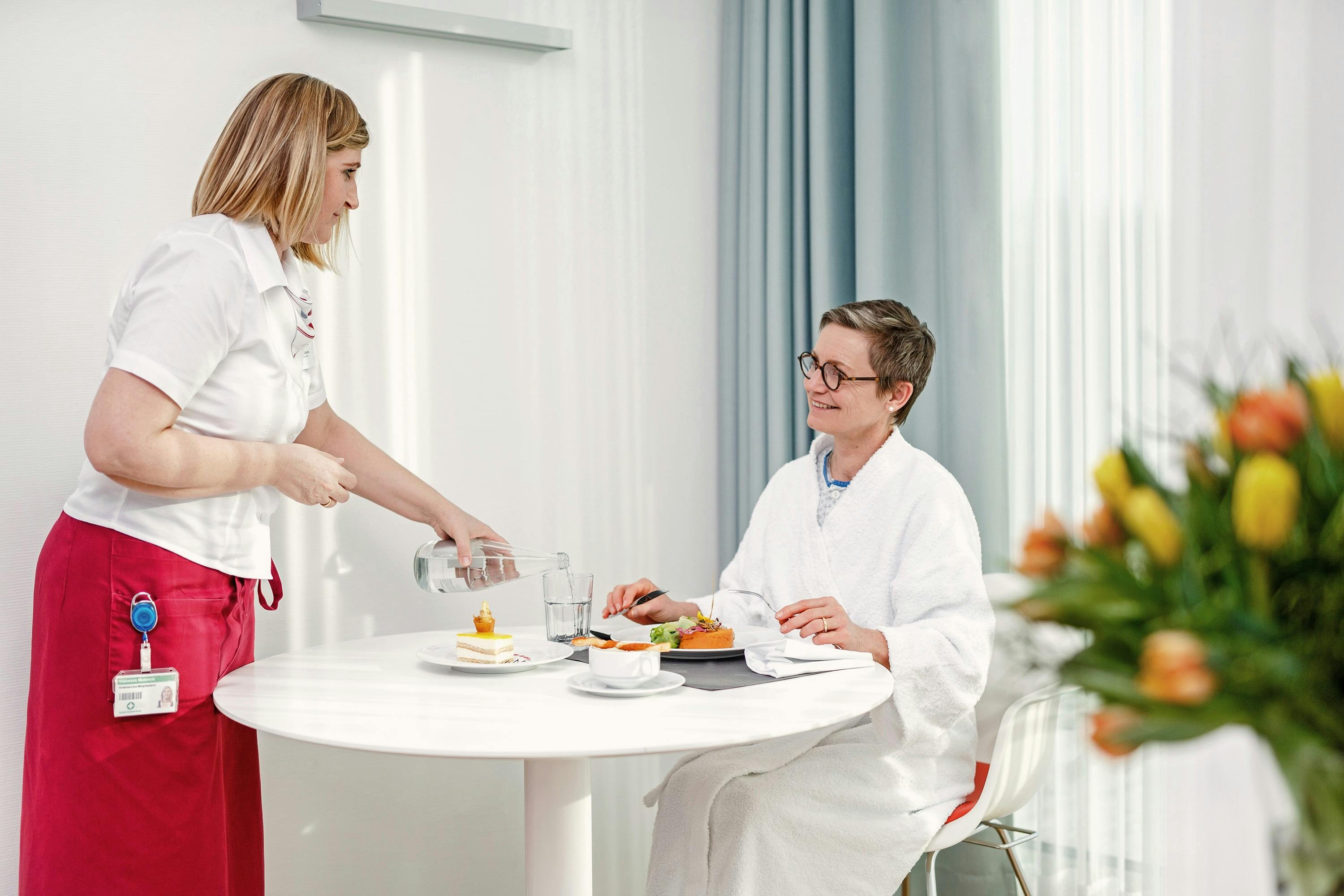
A podcast episode all about design. But not design for design's sake - but design that creates real added value for patients, people in need of care, relatives and professionals in health and care facilities.
Creating products that combine functionality and aesthetics is the aim of Zurich-based designer and design researcher Bitten Stetter and her label "finally.", who is a guest on the latest episode of our podcast "Morgen:Rapport". Jean-Daniel Strub talks to Bitten Stetter about how the individual "health journey" calls for multifunctional approaches - and talks to her about her concept of "trajectory design", a design that allows products to grow with their users and play a supporting role in different phases of life, including the last one.
And, of course, it is also specifically about the products - nightgowns, drinking cups, bed bags - which, according to previous experience in more and more healthcare facilities, are not only experienced as an expression of special appreciation by those affected, but also by carers.


Weitere Beiträge
Podcast
The New Morning: Report: Prevention with bacteriophages – How viruses benefit our health
Salmonella, Listeria and other pathogens can pose a serious threat to our health. This makes it all the more important that contaminated food can be recalled promptly and effectively. However, it is even better if such bacteria cannot contaminate our food in the first place.
Podcast
New podcast episode tomorrow: ‘Morgen:Rapport’ – Tinnitus: How new findings are helping those affected
Silence – for most of us, it means peace and relaxation. For people with tinnitus, however, it can be almost unbearable: a whistling, hissing or throbbing sound is suddenly there all the time.
Podcast
Asking the right questions: Conducting research with, rather than about, patients – Morgen:Rapport
In health research, the questions asked often fail to address patients’ needs. One key way to change this is to involve patients and their experiential knowledge more closely in research. Nevertheless, genuine participation is still far from being the norm.